
Exterior door lock for vacant property
The InvinciBolt Lock
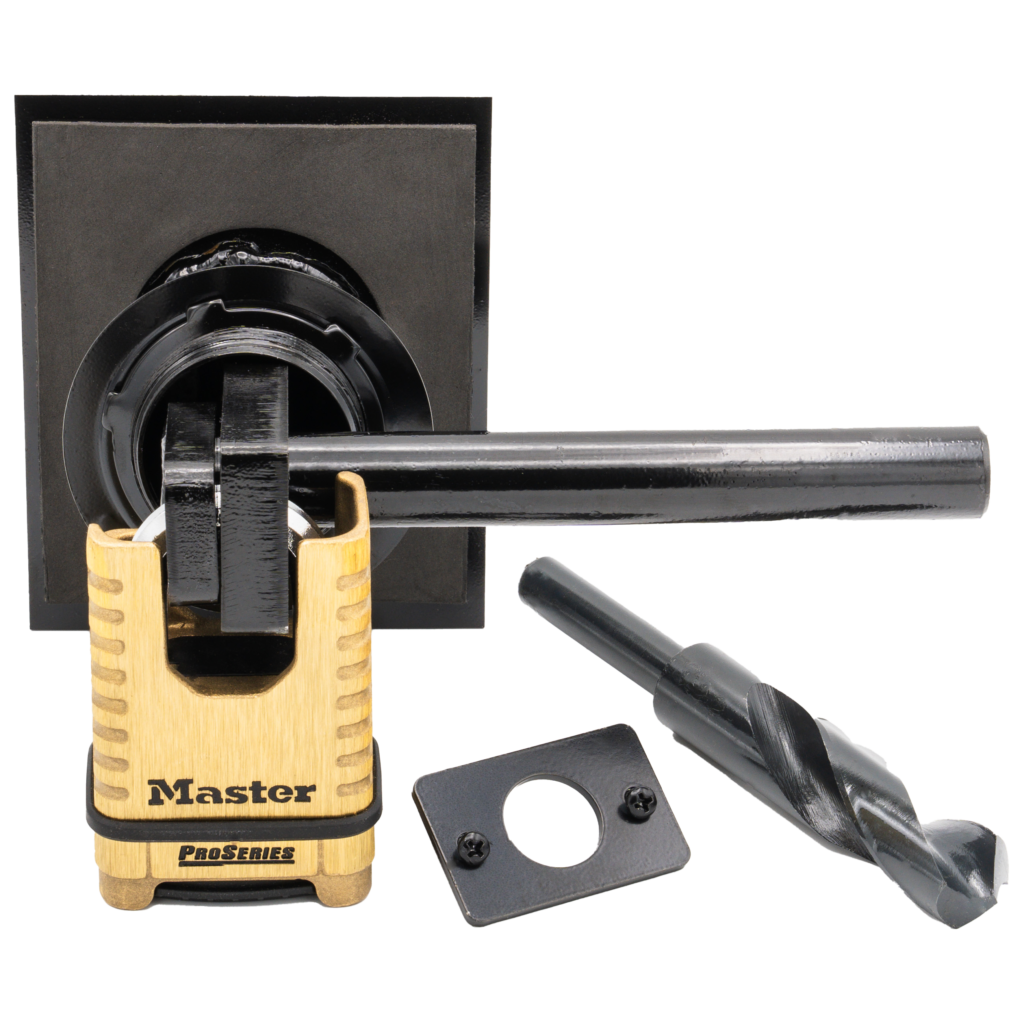
When a house sits empty, it still holds things worth taking, such as copper pipe, appliances and fixtures, and no one is there to notice someone at the door. The InvinciBolt Lock fits the entry door’s deadbolt or doorknob hole, with a matching bolt in a hole in the door jamb. A padlock through both holds the door shut from outside.
For vacant buildings only. It cannot be unlocked from inside. Read the safety rules.
Vacant homes by the numbers
Sources: ATTOM, “National Vacancy Rate Doesn’t Budge in Third Quarter” (August 27, 2026); Adjusters International on the HO-3 vacancy provision; U.S. Bureau of Justice Statistics, “Victimization During Household Burglary” (2010), Table 5.
How it works
-
1
Install it on the entry door
Take out the existing deadbolt or doorknob, fit the InvinciBolt Lock in its place and use the drill bit from the kit, following the install video.
-
2
Lock it from the outside
Shut the door, slide the padlock through the lock and the bolt, push it up to lock it and spin the dials. Nothing on the inside of the door can open it, so make sure the building is empty first.
-
3
Remove it before anyone moves in
When the property is ready to be lived in, take the InvinciBolt Lock off, put the original deadbolt or doorknob back, and keep the lock for your next vacant property.
Product video
A two-minute introduction to the InvinciBolt Lock and a demonstration on a door.
Watch the install
The video walks through every step, from removing the existing deadbolt to locking the InvinciBolt Lock in place. Watch it all the way through before you start.
Pressing play loads the video from YouTube.
Who uses it
Landlords
Between tenants, while a unit is cleaned, repaired and listed.
Rehabbers and flippers
While the house is empty, the tools are on site and the new materials are in.
Property preservation
Securing vacant and bank-owned homes between inspections.
Estates and long vacancies
Homes that will sit empty while they are settled, sold or waiting on repairs.
Guides for empty properties
- Vacant Property Checklist
- Ways to Secure a Vacant Property’s Door
- How to Strengthen an Entry Door
- How to Winterize a Vacant House
- Keys, Lockboxes and Access
- How to Keep Squatters Out of a Vacant House
- Vacant Home Insurance
- Vacant Property Registration
- Why It’s for Empty Buildings Only
- Taking the Lock Off
- Vacant Property Inspection Log
- Vacant Door Cost Calculator
- Safe Use and Property Access
- All guides and examples
What it covers
The InvinciBolt Lock locks one entry door. Windows, door glass and the building’s other doors need their own protection.
Insurers’ checklists for vacant property also call for regular visits, lights on timers and locked windows. The Vacant Property Checklist brings that advice together.
Vacant buildings only
The InvinciBolt Lock cannot be unlocked or removed from inside. When it is locked, that door cannot be used as an exit, even in a fire.
- Use it only on a vacant building or unit. Check the whole building and confirm no person or pet is inside before you lock it.
- Unlock it before anyone goes in, through any door.
- Never lock it while anyone lives, stays, works or visits inside.
- Never use it on a shared entrance or any door someone else needs to get out.
- Never use it to lock out a tenant or lawful occupant.
- Remove it and reinstall a standard deadbolt or doorknob before anyone moves in.
Safe use and property access steps · Full warning and warranty
Questions
What is the InvinciBolt Lock?
An exterior-mounted metal lock that takes the place of an entry door's deadbolt or doorknob while a property sits empty. It is locked and unlocked from outside only, with a padlock. It comes with a Master Lock combination padlock, and you can use another padlock that fits. Protect Your Vacant Property gives the full overview.
What doors does it fit?
A single, side-hinged, swinging exterior entry door in sound condition with a solid frame. It is not for sliding doors, double doors, windows or gates. It fits the deadbolt hole or the doorknob hole. Each InvinciBolt Lock needs its own hole in the door jamb, so a door can take two.
What comes in the kit?
How much does it cost?
$140.00 per lock, plus shipping and any sales tax, both shown before you place your order.
How long does it take to install?
About 20 minutes. The install video covers each step.
Can it be opened from inside?
No. Once it is locked, no one inside can unlock or remove it. That is why it is only for buildings with no one in them.
Does it leave marks on the door jamb?
Yes. It leaves a hole in the door jamb for the bolt and two small screw holes for the strike plate. When the lock comes off, fill them and touch up the paint, as you would after moving any strike plate.
Can a determined thief still get in?
Yes. Any lock can be cut or drilled with enough time and tools, and the InvinciBolt Lock does not cover windows, door glass or other doors. Our guide to securing a vacant property's door covers the rest of the plan.
Can I use it again on another property?
Yes. It is made to be taken off and installed again, so one lock can be moved from one vacant property to the next.
Can I use it on my home while I'm away?
No. A home you live in is not a vacant building, even while you travel: someone could come in through another door and would have no way out through this one. Use it only on a building with no one living or staying in it.
Can you lock a door from the outside?
Yes, with a lock that works only from outside, such as a hasp and padlock or the InvinciBolt Lock. Building and fire codes generally require exit doors in occupied buildings to open from inside without a key, which is why a lock like this is for empty buildings only. Why It's for Empty Buildings Only explains the codes.
Will it keep squatters out?
It locks the entry door from outside between visits, one of the steps police departments list for vacant homes. It is never used to remove someone already living in a house; that takes the legal process in your state. Our guide to keeping squatters out of a vacant house covers the steps owners take and the newer state laws.
How long can a house be vacant before insurance changes?
It depends on the policy. Vacancy clauses typically take effect after 30 to 60 days in a row, and the standard homeowners form stops covering vandalism and glass breakage after 60 days of vacancy. Our vacant home insurance guide explains the terms and what to ask your insurer.
Do I have to register a vacant house with the city?
In some places. Hundreds of U.S. cities and counties have vacant property registration rules, and they differ on timing, fees and how doors must be secured. Our vacant property registration guide has examples and how to find your local rule.
Is there a warranty?
Yes. The InvinciBolt Lock has a limited lifetime warranty for as long as the original purchaser owns it. The padlock is not covered by our warranty; any warranty on it comes from its maker. The Limited Lifetime Warranty and Disclaimer page explains what is covered and how to make a claim.
Who do I contact with questions?
Use the form on our Support page, or email [email protected].
Order the InvinciBolt Lock
Go to the order page